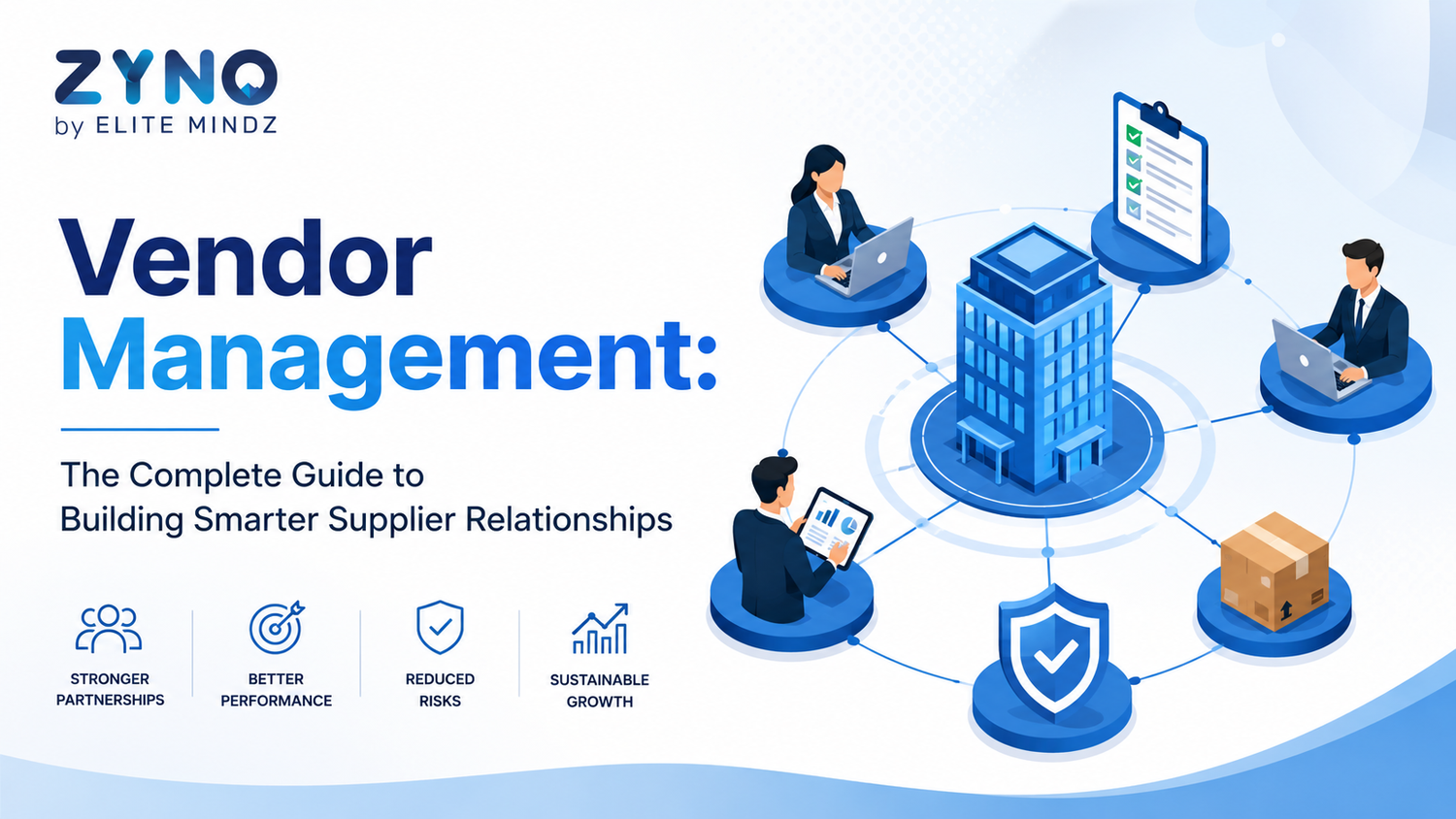
Every business, big or small, depends on a network of suppliers to keep operations running. From raw materials to office supplies, from software licenses to logistics partners, vendors touch almost every function of a company. Yet many businesses still manage these relationships through scattered emails, spreadsheets, and phone calls. This is where vendor management comes in, giving organizations a structured way to select, onboard, evaluate, and collaborate with suppliers.
In this blog, we will break down what vendor management really means, why it matters for procurement teams, and how the right tools can transform a chaotic vendor list into a strategic advantage.
What is Vendor Management?
Vendor management is the process of controlling costs, reducing risks, ensuring service quality, and building long term value from the vendors and suppliers a business works with. It covers the entire lifecycle of a vendor relationship, including:
- Vendor sourcing and selection
- Contract negotiation and vendor onboarding
- Performance tracking and compliance checks
- Payment cycles and invoice reconciliation
- Relationship building and vendor risk management
A strong vendor management system helps procurement teams move away from reactive firefighting and toward proactive, data driven decision making.
Why Vendor Management Matters in Procurement
Procurement and vendor management go hand in hand. While procurement focuses on acquiring goods and services at the right price and quality, vendor management ensures the suppliers behind those purchases remain reliable over time. Without proper vendor oversight, even the best procurement strategy can fall apart due to late deliveries, inconsistent quality, or hidden costs.
Here is why businesses are prioritizing vendor management in procurement:
1. Cost Control and Savings
Centralized vendor data helps procurement teams compare pricing, negotiate better contracts, and avoid duplicate purchases. This directly improves procurement cost optimization.
2. Reduced Vendor Risk
A structured vendor risk assessment process identifies suppliers who may pose financial, compliance, or delivery risks before they disrupt operations.
3. Stronger Supplier Relationships
Regular performance reviews and transparent communication build trust, encouraging vendors to offer better terms, priority service, and flexibility during demand spikes.
4. Faster Procurement Cycles
When vendor data, contracts, and purchase history are organized in one place, procurement teams spend less time searching for information and more time closing deals.
5. Better Compliance and Audit Readiness
A digital vendor record with contracts, certifications, and communication history makes audits smoother and reduces legal exposure.
Key Components of an Effective Vendor Management Process
Vendor Onboarding
Collecting accurate vendor information upfront, including tax documents, bank details, and compliance certificates, sets the foundation for a smooth working relationship.
Vendor Evaluation and Scorecards
Tracking delivery timelines, quality consistency, and responsiveness helps procurement teams rank vendors and make informed renewal or termination decisions.
Contract Management
Storing contracts digitally with renewal alerts prevents missed deadlines and unfavorable auto-renewals.
Purchase Order and Invoice Tracking
Linking purchase orders directly to vendor profiles reduces mismatches between what was ordered, delivered, and billed.
Communication and Collaboration
A shared portal where vendors can submit invoices, check payment status, or update documents reduces email back and forth significantly.
Common Challenges in Vendor Management
Even experienced procurement teams face hurdles such as:
- Fragmented vendor data across departments
- Lack of visibility into vendor performance history
- Manual approval workflows that delay purchase orders
- Difficulty tracking contract expiry dates
- Limited insight into total spend per vendor
These challenges usually stem from relying on manual processes or disconnected tools instead of a unified vendor management software.
How ZYNO Procurement Simplifies Vendor Management
This is exactly the gap that ZYNO Procurement by Elite Mindz is built to close. Instead of juggling spreadsheets and email threads, procurement teams get a centralized platform to manage the full vendor lifecycle, from onboarding to performance tracking to payments.
With ZYNO, businesses can maintain digital vendor profiles, automate purchase order approvals, track contract renewals, and generate real time reports on vendor performance and spend. Because it is part of the broader ZYNO suite, procurement data can also connect with finance and inventory modules, giving teams a complete view of how vendor decisions impact the bigger picture.
For growing Indian SMEs and enterprises looking to move beyond manual vendor management processes, ZYNO Procurement offers a practical way to bring structure, speed, and accountability into supplier relationships, without adding unnecessary complexity to daily operations.
Best Practices for Vendor Management in 2026
- Centralize vendor data in a single system rather than spreading it across emails and spreadsheets.
- Set clear KPIs for every vendor category, covering delivery time, quality, and responsiveness.
- Automate repetitive tasks like purchase order generation and invoice matching to reduce manual errors.
- Review vendor contracts regularly instead of waiting until renewal deadlines approach.
- Diversify your vendor base to avoid over-reliance on a single supplier for critical goods or services.
- Encourage two way feedback so vendors understand expectations and can flag issues early.
Final Thoughts
Vendor management is no longer just an administrative task tucked away in the procurement department. It has become a strategic function that directly affects cost efficiency, operational continuity, and business growth. Companies that invest in structured vendor management systems gain better control over spend, reduce risk, and build supplier partnerships that support long term success.
If your business is still managing vendors through scattered tools, it may be time to explore a dedicated procurement and vendor management solution like ZYNO Procurement to bring everything under one roof.
Frequently Asked Questions
- What is vendor management in procurement?
Vendor management in procurement is the process of sourcing, onboarding, evaluating, and maintaining relationships with suppliers to ensure consistent quality, timely delivery, and cost efficiency throughout the purchasing cycle.
- Why is vendor management important for businesses?
It helps businesses control costs, reduce supply chain risks, maintain compliance, and build reliable long term supplier relationships instead of relying on ad hoc or reactive purchasing decisions.
- What is the difference between vendor management and procurement?
Procurement focuses on the actual buying process, including sourcing and purchase orders, while vendor management focuses on the ongoing relationship with suppliers, including performance tracking, contracts, and risk management.
- What are the key steps in the vendor management process? The core steps
include vendor identification, onboarding and documentation, contract negotiation, performance evaluation, payment processing, and periodic relationship reviews.
- What is vendor risk management?
Vendor risk management involves identifying and mitigating financial, operational, compliance, or reputational risks that a supplier could bring to the business, often through regular audits and performance scorecards.
- How does vendor management software help procurement teams?
Vendor management software centralizes supplier data, automates purchase orders and approvals, tracks contract renewals, and provides real time visibility into vendor performance and spend, reducing manual work and errors.
- How does ZYNO Procurement support vendor management?
ZYNO Procurement by Elite Mindz gives businesses a centralized platform to manage vendor onboarding, purchase orders, contracts, and performance tracking, while connecting procurement data with finance and inventory for complete visibility.
- How often should vendor performance be reviewed?
Most businesses review vendor performance quarterly, though critical suppliers or high spend vendors are often evaluated monthly to catch issues early.
- What documents are needed for vendor onboarding?
Common documents include GST registration, PAN details, bank account information, business licenses, and any relevant quality or compliance certifications.
- Can small businesses benefit from vendor management systems?
Yes, even small and mid sized businesses benefit significantly since a structured system prevents missed renewals, duplicate orders, and payment delays that are common with manual vendor tracking.