
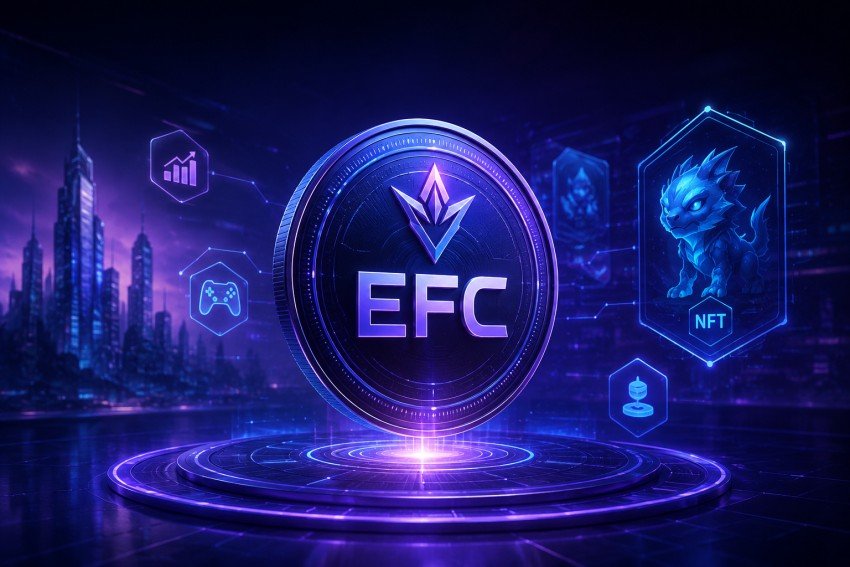
Crypto can be confusing, especially when a new project appears with unfamiliar names, technical terms, and big promises. If you have recently come across etherions faston crypto and the EFC name, you may be wondering what it actually is, how it is supposed to work, and whether the information available online can be trusted.
The first thing to understand is that public information about Etherions Faston remains limited and inconsistent. Several crypto websites describe EFC as an ecosystem involving a token, NFTs, gaming, and decentralized finance, but important details such as a confirmed smart-contract address, technical documentation, a named development team, and verified exchange listings have not been clearly established in the sources reviewed.
That does not automatically prove that the project is fraudulent. It simply means readers should separate claims from evidence before making any financial decision.
What Is Etherions Faston Crypto?
Etherions Faston is discussed online as a proposed or emerging crypto ecosystem associated with a token commonly referred to as EFC. Various third-party descriptions connect the project with blockchain technology, NFTs, gaming, staking, governance, and decentralized finance (DeFi).
In simple terms, the idea appears to be broader than a cryptocurrency used only for sending money. Some descriptions present EFC as a token that could work within a larger digital ecosystem containing blockchain-based assets and gaming features.
However, there is an important distinction between describing a project’s intended features and confirming that those features are actually working. Current public research has not established enough evidence to treat all of these features as proven, operational products.
Understanding EFC Without Technical Language
For beginners, it helps to break the terminology into simple pieces.
What Does EFC Mean?
EFC is the abbreviation that several online sources associate with Etherions Faston. It is described as the ecosystem’s native token.
A native token is simply a digital asset designed to be used within a particular blockchain or project. For example, a project might use its token to pay fees, participate in applications, access features, vote on proposals, or trade digital assets.
The challenge with EFC is verification. A cryptocurrency normally has a clearly identifiable contract or blockchain record that allows users to inspect supply, transactions, holders, and other information. Multiple sources reviewing EFC have reported that a confirmed smart-contract address has not been publicly established.
What Are Etherions?
The name “Etherions” is also used to describe digital creatures or collectible assets associated with the project’s proposed gaming and NFT concept.
An NFT, or non-fungible token, is a unique blockchain-based digital asset. Unlike ordinary cryptocurrencies where one unit is generally interchangeable with another, NFTs can represent individual items with different characteristics.
Some descriptions of the project claim that Etherions could have different traits, rarity levels, and abilities and could be used in gaming activities. These descriptions should currently be treated as project claims rather than independently verified functionality.
How the Proposed Ecosystem Could Work
The easiest way to understand the reported concept is to imagine three connected parts: a token, digital collectibles, and financial or governance features.
The EFC token would potentially provide the economic layer. Etherions would represent the collectible or gaming layer, while DeFi features such as staking or governance would provide additional utility.
For example, imagine a game in which players own digital creatures. If the system were fully operational, a player might use a project token to acquire an item, own an NFT representing a creature, and potentially use that asset within a game.
This is a common Web3 model. However, the existence of similar systems elsewhere does not prove that EFC currently provides the same functionality.
What Is DeFi in Simple Terms?
DeFi stands for decentralized finance. It refers to financial applications that use blockchain-based smart contracts instead of relying entirely on traditional financial institutions.
Common DeFi activities include swapping tokens, lending, borrowing, staking, and governance.
Some descriptions of EFC associate the project with staking and governance. In theory, staking could involve locking tokens to support a network or application in return for potential rewards. Governance could allow token holders to participate in certain project decisions.
But users should not assume that these features are available simply because they appear in online descriptions. A functioning DeFi system should provide contracts, documentation, transaction records, and other evidence that users can inspect.
Key Facts About EFC
Because the available information is still developing, the following table separates commonly reported claims from what has been independently confirmed in recent sources.
| Area | What Online Sources Describe | Verification Status |
|---|---|---|
| Token | EFC is described as a native token | Contract not clearly confirmed |
| NFTs | Etherions are described as digital collectibles | Independent activity is unclear |
| Gaming | Some sources describe a GameFi ecosystem | Live usage is not clearly verified |
| DeFi | Staking and governance are mentioned | Operational details are unclear |
| Blockchain | Some descriptions claim EVM compatibility | Network details remain unconfirmed |
| Exchange listings | EFC is discussed as a tradable asset | Major listings are not confirmed |
| Whitepaper | A technical document would normally explain the system | No published whitepaper was identified in recent reviews |
| Development team | Project descriptions refer to an Etherions team | Individually named, verifiable founders were not established |
These findings are consistent with recent reviews from WEEX, Blockchain Reporter, and Tapbit, which all highlight gaps in publicly verifiable information.
What Makes Verification So Important?
A crypto token is not trustworthy simply because a website, social media account, or article mentions it.
A serious research process starts with evidence. The most important details include the exact contract address, blockchain network, token supply, transaction history, official documentation, development team, audits, and legitimate market activity.
Without these details, it becomes difficult to distinguish an official token from an unrelated asset using the same ticker or name.
This is particularly important because EFC is a short ticker. A ticker alone is not enough to identify a cryptocurrency. Users should always verify the exact contract and network before interacting with any token.
EFC Compared With an Established Crypto Project
It can help to compare what users normally expect from a mature crypto project with what has currently been reported about EFC.
| Feature | Established Crypto Project | EFC Based on Recent Public Reviews |
| Public contract | Usually easy to identify | Not clearly confirmed |
| Technical documentation | Usually available | Whitepaper not clearly identified |
| Named team | Often publicly documented | Team identity remains unclear |
| Exchange presence | Usually verifiable | Major listings not confirmed |
| Blockchain activity | Can be inspected | Live network activity is unclear |
| Security audits | Often publicly available | No independent audit was clearly identified |
| Market data | Price and volume can be checked | Data may be unreliable or unavailable |
This comparison does not label EFC as a scam. Instead, it shows why caution is appropriate when information is incomplete. Recent reviews specifically warn that quoted prices can be unreliable when there is no confirmed contract or trusted market listing.
Is Etherions Faston Crypto Legit?
This is one of the most important questions people ask.
At present, the safest answer is that the project should be considered unverified rather than automatically legitimate or fraudulent. Recent research has identified several missing pieces of evidence, including a confirmed smart contract, published technical documentation, a publicly identifiable development team, major exchange listings, and a clearly documented live mainnet.
That distinction matters. Lack of evidence is a reason for caution, but it is not by itself proof of wrongdoing.
If new documentation becomes available, users should reassess the project based on that evidence rather than relying on older articles or social media claims.
How to Research EFC Safely
If you are considering EFC, do not begin by asking how much money you can make. Begin by asking whether the project can be independently verified.
Find the Official Contract
Look for an official contract address published through a trustworthy project source. Then check the address on the appropriate blockchain explorer.
Never copy a contract address from an unknown social media post or random article.
Check the Network
Confirm which blockchain the token actually uses. A token name or ticker does not prove that it belongs to a particular network.
Look for Technical Documentation
A serious project should explain how its technology works, how tokens are distributed, and what the roadmap looks like.
A vague promotional page is not a replacement for technical documentation.
Investigate the Team
Look for real people with verifiable professional backgrounds. A project that provides no meaningful information about who develops or manages it deserves additional scrutiny.
Verify Exchange Information
Do not trust screenshots showing a token price or exchange listing. Search the exchange directly and confirm that the exact asset and contract address match.
Avoid Pressure to Invest Quickly
Urgency is one of the biggest warning signs in online financial promotions. Be especially careful when someone claims you must buy immediately because the token is about to “explode.”
A legitimate research process should give you enough time to verify information.
Common Mistakes Beginners Should Avoid
One common mistake is assuming that a professional-looking website means a project is established. Design can be copied or created quickly, while blockchain verification requires actual evidence.
Another mistake is confusing repeated claims with independent confirmation. If ten websites repeat the same statement but all rely on the same original source, that is not ten independent confirmations.
A third mistake is focusing only on price. A low token price does not automatically mean an asset is cheap, and a high token price does not automatically mean it is valuable.
Finally, never share your wallet recovery phrase or private keys with someone claiming to help you purchase or verify EFC.
What Could Make EFC Easier to Evaluate?
Several developments would make the project much easier for the public to assess.
A clearly published contract address would allow users to inspect on-chain activity. A detailed whitepaper could explain the technology and token economics. Publicly identifiable developers could make the project more accountable.
Independent security audits, verified exchange listings, functioning applications, and measurable user activity would provide additional evidence.
These are not guarantees of success. They simply give users better information with which to make decisions.
Frequently Asked Questions
1. What is Etherions Faston Crypto?
It is a term used online for a crypto ecosystem associated with EFC, NFTs, gaming, and DeFi features. However, important details about the project remain difficult to independently verify.
2. What is EFC?
EFC is the ticker or abbreviation that several online sources associate with Etherions Faston. Users should verify the exact contract address before assuming that any token labeled EFC belongs to the project.
3. Is EFC a cryptocurrency?
EFC is described online as a cryptocurrency token, but recent research has not established enough public evidence to confidently verify its contract, network activity, or market status.
4. Does Etherions Faston have NFTs?
Online descriptions associate Etherions Faston with NFT-based digital creatures. However, independently verified collections, activity, and marketplace data are not clearly established in the sources reviewed.
5. Can I buy EFC?
You should not assume that an EFC token found on an exchange or decentralized platform is the official asset. First verify the official contract, blockchain network, and legitimate market listing.
6. Is Etherions Faston a scam?
There is not enough evidence to make a definitive accusation. However, multiple recent reviews identify significant verification gaps, so it is more responsible to describe the project as unverified and advise caution.
7. What should I check before investing in EFC?
Check the official contract address, blockchain network, technical documentation, token supply, development team, security audits, exchange listings, and real network activity. Never invest based only on promotional claims or an attractive price prediction.
Final Thoughts
The crypto market constantly introduces new projects, and unfamiliar names can quickly attract attention. etherions faston crypto is one such topic, but the most important lesson for beginners is to distinguish an interesting idea from a verified working project.
Current public sources describe EFC as an ecosystem involving a token, NFTs, gaming, and DeFi, yet several critical details remain unconfirmed.
If you are researching etherions faston crypto, take a slow and evidence-based approach. Verify the contract, investigate the team, read technical documentation, confirm market listings, and never risk money simply because a project is trending online.
In crypto, careful research is often more valuable than chasing the next big opportunity.