

The internet has always rewarded attention. But over the past decade, attention has evolved into currency, status, and survival for influencers. The rise of viral culture has blurred the line between creativity and chaos. What once felt like playful experimentation now often feels like a race to extremes.
That’s where the phrase InfluencersGoBeWild comes in. It reflects a pattern we’re seeing more often: creators pushing boundaries further and further in pursuit of visibility. And sometimes, that push crosses a line.
In today’s digital ecosystem, the question isn’t whether influencers can go viral. It’s how far they’re willing to go to stay relevant.
The Attention Economy Has No Speed Limit
Social media platforms reward engagement. Likes, shares, comments, saves, and watch time directly influence algorithmic visibility. The more reaction a post generates, the more it spreads.
The problem? Controversy spreads faster than consistency.
The first graph above shows a steady rise in reported influencer controversies from 2018 to 2025. This upward trend reflects something deeper than just “more influencers.” It signals an environment where extreme content increasingly dominates timelines.
When platforms are optimized for engagement, and engagement spikes during emotional reactions, the incentive structure shifts. Calm, thoughtful content competes against outrage, shock, and spectacle.
That imbalance shapes behavior.
Why Controversy Pays
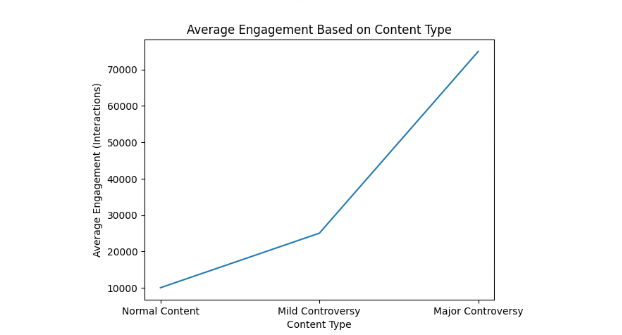
The second graph illustrates average engagement based on content type. Major controversial content dramatically outperforms normal posts. The spike is not subtle. It is exponential.
This isn’t accidental.
Audiences are wired for emotion. Content that triggers surprise, anger, or disbelief spreads rapidly. Influencers who understand this often test the boundaries of what’s acceptable.
Some start small:
- Provocative opinions
- Risky public pranks
- Exaggerated lifestyle displays
Others escalate:
- Dangerous stunts
- Fake conflicts
- Ethical gray-area experiments
- Exploitative behavior
The pattern behind InfluencersGoBeWild is rarely impulsive. It’s strategic.
The Slippery Slope of Digital Fame
Internet fame creates a feedback loop.
- A creator posts something bold.
- Engagement spikes.
- The algorithm amplifies it.
- Followers increase.
- Brand deals follow.
Once creators see that extreme behavior drives growth, restraint becomes harder.
The issue isn’t that influencers lack awareness. It’s that the system quietly encourages escalation.
Over time, audiences also become desensitized. What shocked viewers last year may barely register today. That forces creators to raise the stakes just to maintain momentum.
This is how InfluencersGoBeWild becomes less of a meme and more of a business model.
When Fame Crosses the Line
Crossing the line usually happens in one of four ways:
1. Ethical Violations
Fake giveaways. Misleading endorsements. Hidden sponsorships. Manipulative narratives. These erode trust quickly.
2. Public Safety Risks
Dangerous pranks, risky challenges, and reckless stunts designed to go viral can put both creators and bystanders at risk.
3. Exploitation
Using vulnerable individuals, children, or personal trauma for views crosses into morally troubling territory.
4. Legal Consequences
Trespassing, harassment, fraud, or defamation can move beyond “controversial” into criminal.
The audience reaction often follows a predictable cycle:
- Viral exposure
- Public backlash
- Temporary cancellation
- Apology video
- Gradual comeback
The comeback phase is especially telling. In many cases, controversy increases name recognition. Even negative attention can strengthen brand recall.
The Psychology Behind Boundary-Pushing
Why do influencers take these risks?
Several psychological factors are at play:
Validation Dependency
Social media metrics provide immediate feedback. Dopamine cycles can reinforce extreme behavior.
Competitive Pressure
Thousands of creators compete in every niche. Standing out feels essential.
Identity Fusion
When a creator’s personal identity becomes inseparable from their online persona, maintaining relevance feels existential.
Monetization Pressure
Influencing is often a full-time career. Income can depend on visibility.
These pressures can distort decision-making. Rational risk assessment shrinks when visibility equals income.
The Role of Platforms
It’s easy to blame influencers alone. But platforms shape incentives.
Algorithms prioritize engagement signals over ethical nuance. Automated moderation often reacts after content spreads, not before.
When controversy generates record engagement numbers, the system technically interprets that as success.
Some platforms have introduced stronger moderation policies and brand safety tools. But enforcement remains inconsistent, especially at scale.
InfluencersGoBeWild is partly a product of platform architecture.
Brands and the Risk Factor
For brands, influencer partnerships carry risk.
On one hand:
- Influencers provide authentic reach.
- They connect deeply with niche communities.
- They often outperform traditional ads.
On the other:
- A single scandal can damage brand association.
- Reputational fallout spreads quickly.
- Contracts may be terminated abruptly.
Brands now conduct deeper background checks and monitor influencer behavior continuously. Crisis clauses in contracts are common.
Risk management is no longer optional.
The Audience’s Complicity
There’s an uncomfortable truth here.
Audiences fuel the cycle.
Viewers often criticize extreme content while simultaneously engaging with it. Outrage comments, reaction videos, and reposts amplify reach.
Even negative engagement is engagement.
The cultural appetite for spectacle drives the supply.
InfluencersGoBeWild reflects collective behavior, not just individual creators.
Regulation and Accountability
Governments and regulators are increasingly involved in influencer oversight.
Disclosure laws, advertising transparency rules, and consumer protection policies are tightening globally. Authorities are recognizing influencer marketing as a serious commercial activity, not just entertainment.
Still, enforcement varies by region and platform.
Accountability remains inconsistent.
Is This Sustainable?
The current trajectory suggests increasing volatility.
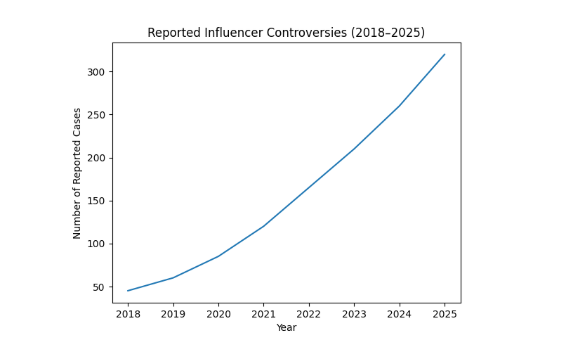
As shown in the controversy growth graph, incidents have steadily climbed year after year. If that trend continues unchecked, audience trust may erode across the entire influencer economy.
Trust is the foundation of influence.
When trust weakens:
- Brand deals decline
- Audience loyalty drops
- Platform credibility suffers
Sustainable influence requires boundaries.
The Shift Toward Responsible Influence
Interestingly, a counter-movement is emerging.
Some creators are building audiences around:
- Transparency
- Skill-based content
- Education
- Ethical storytelling
Long-term trust often outperforms short-term shock.
Brands increasingly prefer stable, reputation-safe partners. Platforms are experimenting with better moderation tools and AI-based content screening.
The market may self-correct.
If InfluencersGoBeWild represents the peak of chaos, the next phase could emphasize credibility.
The Economics Behind “Add keyword”
When analyzing this trend from a strategic standpoint, the concept of Add keyword becomes relevant. Add keyword symbolizes how viral tactics are sometimes artificially injected into content strategies to amplify reach.
In many cases, Add keyword reflects the deliberate use of controversial elements to trigger algorithmic attention. It is rarely accidental.
However, relying heavily on Add keyword strategies can backfire. Short-term growth may come at the expense of long-term trust.
Sustainable influence depends on balancing visibility with responsibility.
The Future of Digital Fame
Influence is evolving.
We’re seeing:
- AI-generated creators
- Virtual influencers
- Stricter advertising regulations
- Smarter brand vetting systems
- Audience fatigue with drama
The influencer economy is maturing. That maturity demands accountability.
Internet fame no longer exists in a vacuum. It intersects with business, law, and culture.
When influencers cross the line, the consequences ripple far beyond a single post.
Final Thoughts
InfluencersGoBeWild captures a moment in digital culture where attention sometimes outweighs ethics.
The data shows rising controversies and massive engagement spikes tied to extreme content. That’s not coincidence. It’s incentive design.
But the future of influence does not have to revolve around chaos.
Creators who build sustainable brands, prioritize transparency, and understand long-term reputation may ultimately win.
Fame is easy to chase.
Trust is harder to earn.
And once lost, it’s far more difficult to recover.
FAQs
1. What does InfluencersGoBeWild mean?
It refers to influencers pushing boundaries or engaging in extreme behavior to gain attention, often crossing ethical or social lines.
2. Why does controversial content get more engagement?
Emotional content triggers stronger reactions, which increases shares, comments, and algorithmic amplification.
3. Are platforms responsible for influencer controversies?
Platforms influence behavior through algorithm design, but creators ultimately choose their actions.
4. Can influencers recover after a scandal?
Yes, many do. However, recovery depends on accountability, audience loyalty, and the severity of the issue.
5. Is the trend of extreme influencer behavior sustainable?
Not long term. Trust erosion and regulatory pressure may gradually shift the culture toward more responsible influence.