
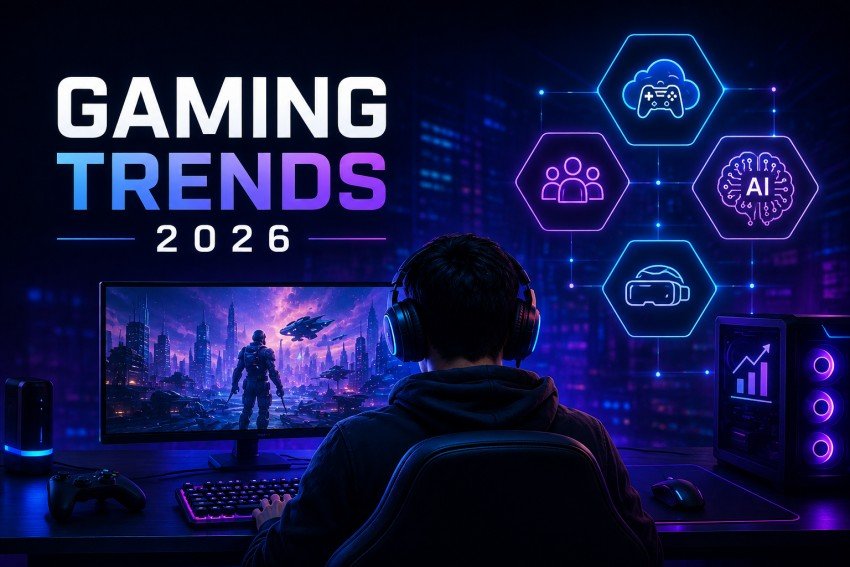
Gaming in 2026 is changing faster than ever. New technology is affecting how games are created, played, shared, and monetized. At the same time, players are becoming more selective. They want better experiences, smoother performance, fair pricing, and games that respect their time.
For anyone trying to understand where the industry is heading, UggWorldTech gaming trends by UndergrowthGames provides a useful starting point for looking at the major changes shaping modern gaming. The discussion around UggWorldTech focuses on evolving player expectations, technology, social gaming, and new ways of delivering interactive experiences.
However, these trends are not limited to one website or one gaming company. They reflect wider changes across mobile, PC, console, cloud gaming, artificial intelligence, and online communities. Here are the most important gaming trends to watch in 2026.
1. Artificial Intelligence Is Changing Game Development
Artificial intelligence is becoming one of the biggest forces in gaming. Developers are using AI to help with tasks such as testing, coding, artwork, dialogue development, and content production.
This does not necessarily mean that AI will replace game developers. Instead, it can help teams complete repetitive tasks faster and spend more time on gameplay, storytelling, and creative decisions.
For example, a small development team can use AI-assisted tools to test different game environments or identify certain bugs. This can reduce some of the workload that would traditionally require many hours of manual testing.
Research from Boston Consulting Group found that around 7,300 games on Steam disclose the use of AI applications, while its analysis estimated that approximately half of studios are now using AI in some way.
The challenge is quality. If developers use AI simply to produce large amounts of low-quality content, players may become frustrated. The strongest games will likely be those where AI supports creativity rather than replacing it.
2. Cross-Platform Gaming Is Becoming More Important
Players no longer want their gaming experience locked to one device.
A player might start a game on a PC, continue on a console, and later use a mobile device or another supported platform. Cross-platform systems make this possible by allowing players on different devices to interact within the same gaming ecosystem.
This trend is especially useful for multiplayer games. Friends do not always own the same hardware, so cross-play can make it easier for them to play together.
Cloud technology is also supporting this movement. According to BCG’s 2025 gaming survey, 60% of surveyed players had tried cloud gaming, and 80% of those players reported a positive experience.
For gamers, the biggest advantage is flexibility. Instead of asking, “Which console does my friend have?” players can increasingly focus on which game they want to play.
3. Cloud Gaming Could Reduce Hardware Barriers
Cloud gaming is another major trend entering 2026 with greater momentum.
Traditionally, playing a demanding game required powerful hardware. A high-end gaming PC or console could be expensive, especially for casual players. Cloud gaming changes the model by processing much of the game remotely and streaming the experience to the player’s device.
This could make high-quality gaming available to people who do not own expensive hardware.
BCG estimates that global cloud gaming revenue could grow from approximately $1.4 billion in 2025 to around $18.3 billion by 2030.
There are still limitations. Internet speed, latency, server availability, and regional infrastructure can affect the experience.
Still, the direction is clear: gaming is becoming less dependent on the physical hardware sitting in front of the player.
4. User-Generated Content Is Becoming More Powerful
Players are no longer satisfied with simply consuming content created by developers. Many also want to create their own experiences.
User-generated content, often called UGC, can include custom maps, characters, game modes, items, stories, and entire experiences.
Platforms such as Roblox and Fortnite have demonstrated how powerful creator-driven ecosystems can become. BCG reported that the creator economy around Fortnite and Roblox alone was expected to generate more than $1.5 billion in creator payouts in 2025. Its survey also found that 40% of gamers said they were consuming more UGC than the previous year.
This creates a major opportunity for smaller creators.
Instead of competing directly with a large studio, an independent creator can build a community around a unique idea. If players enjoy the experience, they can become part of the game’s growth.
5. Live-Service Games Are Focusing More on Player Retention
Live-service gaming is not a new concept, but the way developers approach it is changing.
Games that receive regular updates can keep players interested for months or years. However, players are increasingly sensitive to excessive grinding, repetitive tasks, and aggressive monetization.
A successful live-service game needs to provide meaningful reasons to return.
That could mean new story content, seasonal events, interesting challenges, community activities, or gameplay improvements. Simply adding another digital item may not be enough.
The goal is to make players feel that their time is respected.
6. Mobile Gaming Is Moving Beyond Simple Downloads
Mobile gaming remains one of the largest parts of the global gaming industry. However, the focus is shifting from simply getting more downloads toward keeping players engaged and generating sustainable revenue.
Sensor Tower reported that games were downloaded 52 billion times in 2025, with mobile accounting for the vast majority of those downloads.
Its H1 2026 Gaming Market Index also reported approximately $39.8 billion in worldwide mobile in-app purchase revenue during the first half of 2026, while mobile playtime reached about 221 billion hours.
These numbers show why mobile remains important.
For developers, however, competition is intense. Thousands of new games can appear in app stores, making discoverability difficult. A game needs strong gameplay, good presentation, and a reason for players to keep returning.
7. Immersive Gaming Will Continue to Develop
Virtual reality and augmented reality are also part of the industry’s long-term direction.
VR can place players directly inside a digital environment. Instead of looking at a character on a screen, players can feel as though they are standing inside the game world.
Meanwhile, augmented reality combines digital elements with the physical environment.
These technologies still face challenges, including hardware costs, comfort, accessibility, and the need for compelling software. However, improvements in tracking, graphics, and interaction could make immersive gaming more attractive.
The important point is that better hardware alone will not guarantee success. Developers still need games that give players a genuine reason to use these devices.
Key Gaming Statistics to Watch in 2026
The following figures provide a useful snapshot of where the industry currently stands:
| Gaming Fact | Recent Figure | Why It Matters |
|---|---|---|
| Mobile game downloads in 2025 | 52 billion | Shows the enormous reach of mobile gaming |
| Mobile game downloads per minute in 2025 | About 95,000 | Highlights the scale of mobile demand |
| PC/console titles downloaded per minute in 2025 | About 3,800 | Shows continued activity outside mobile |
| Mobile IAP revenue, H1 2026 | About $39.8 billion | Demonstrates the strength of mobile monetization |
| Mobile playtime, H1 2026 | About 221 billion hours | Shows the huge amount of player engagement |
| Gamers who tried cloud gaming in BCG survey | 60% | Indicates growing awareness and adoption |
| Cloud gamers reporting a positive experience | 80% | Suggests improving cloud performance |
Sources: Sensor Tower and Boston Consulting Group.
How Gaming Is Changing for Players
These trends are not only important for developers. They directly affect everyday gamers.
| Traditional Gaming Experience | Emerging 2026 Experience |
| Device-specific gaming | Cross-platform access |
| Expensive hardware requirements | More cloud-based options |
| Developer-controlled content | More user-generated content |
| Manual development processes | Greater AI assistance |
| One-time game releases | Continuous updates and live content |
| Separate gaming communities | Larger connected communities |
| Fixed game experiences | More personalized and dynamic experiences |
The biggest difference is flexibility.
Players increasingly expect to choose how, where, and with whom they play. Developers that understand this expectation can create stronger relationships with their communities.
What These Trends Mean for Game Developers
Developers should not chase every trend simply because it is popular.
Instead, they should ask whether a technology solves a real problem for their players.
For example, AI may be useful for testing and production efficiency, but adding an AI feature to a game simply for marketing may not improve the experience. Similarly, adding cross-play is valuable when it helps players find friends and matches, but it requires careful technical planning.
Community feedback is equally important.
Developers should watch player discussions, reviews, support requests, and gameplay behavior. A small improvement that solves a major frustration can sometimes be more valuable than an expensive new feature.
This player-focused approach fits the broader direction discussed around UggWorldTech gaming trends by UndergrowthGames, where evolving technology is connected with accessibility, social interaction, personalization, and ongoing player engagement.
What Gamers Should Watch in 2026
Players can also use these trends to make smarter choices.
First, look beyond graphics. A game can have impressive visuals but weak gameplay. Before buying, check reviews that discuss performance, controls, progression, and long-term value.
Second, pay attention to monetization. Free-to-play does not always mean inexpensive. Check whether important gameplay features are locked behind purchases or whether the game offers a fair progression system.
Third, consider platform support. If you regularly play with friends, cross-play and cross-progression may be more important than graphical quality.
Finally, protect your accounts. As gaming becomes more connected to online services, digital wallets, social platforms, and creator ecosystems, account security becomes increasingly important.
Use strong passwords, enable two-factor authentication when available, and avoid suspicious links promising free items or currency.
The Biggest Opportunity: Better Player Experiences
Technology is exciting, but technology itself is not the final goal.
The real goal is better gaming.
AI should help developers create better games. Cloud technology should make gaming more accessible. Cross-platform play should connect friends. UGC should give players more creative freedom. Live-service systems should provide meaningful reasons to return.
When these technologies are used thoughtfully, they can make gaming more enjoyable rather than simply more complicated.
At the same time, players should remain critical. Not every new technology will improve every game. Sometimes a simple, well-designed game can provide a better experience than a title overloaded with unnecessary features.
Frequently Asked Questions
What are the biggest gaming trends for 2026?
The biggest trends include AI-assisted development, cross-platform gaming, cloud gaming, user-generated content, live-service improvements, mobile gaming growth, and immersive technologies such as VR and AR.
What is UggWorldTech gaming trends by UndergrowthGames?
It is a topic associated with UndergrowthGames that discusses major changes affecting gaming, including technology, player expectations, social experiences, and evolving game design. The broader trends discussed also reflect changes reported across the gaming industry.
Will AI replace game developers?
AI is more likely to become a development tool than completely replace game developers. It can assist with coding, testing, content creation, and other repetitive tasks, while human developers remain important for creative direction and gameplay decisions.
Is cloud gaming worth trying in 2026?
It can be worth trying if you have a reliable, fast internet connection and want access to games without investing heavily in gaming hardware. Performance can still vary depending on location, network quality, and service availability.
Why is cross-platform gaming becoming popular?
Cross-platform gaming allows people using different devices to play together. This can make multiplayer communities larger and reduce the need for friends to purchase the same gaming hardware.
Is mobile gaming still growing?
Mobile gaming remains extremely important. Sensor Tower reported 52 billion game downloads in 2025 and about $39.8 billion in mobile in-app purchase revenue during H1 2026.
What should gamers look for in a new game?
Look at gameplay quality, performance, reviews, monetization, platform support, update policies, and community feedback. A popular game is not automatically the right game for every player.
Final Thoughts
Gaming in 2026 is moving toward a more connected, flexible, and technology-driven future. AI is changing development, cloud services are reducing hardware barriers, cross-platform play is connecting communities, and user-generated content is giving players a larger role in shaping digital worlds.
The most important lesson is that innovation should serve the player. New technology matters when it creates better gameplay, improves accessibility, strengthens communities, or gives players meaningful choices.
For developers, the opportunity is to use these technologies carefully instead of chasing every new trend. For gamers, the best approach is to stay informed, evaluate games beyond their marketing, and choose experiences that offer genuine value.
Ultimately, the strongest gaming trend of 2026 may be the industry’s growing focus on what players actually want. As technology continues to evolve, games that combine innovation with strong gameplay, fair systems, and active communities are likely to stand out from the crowd.