
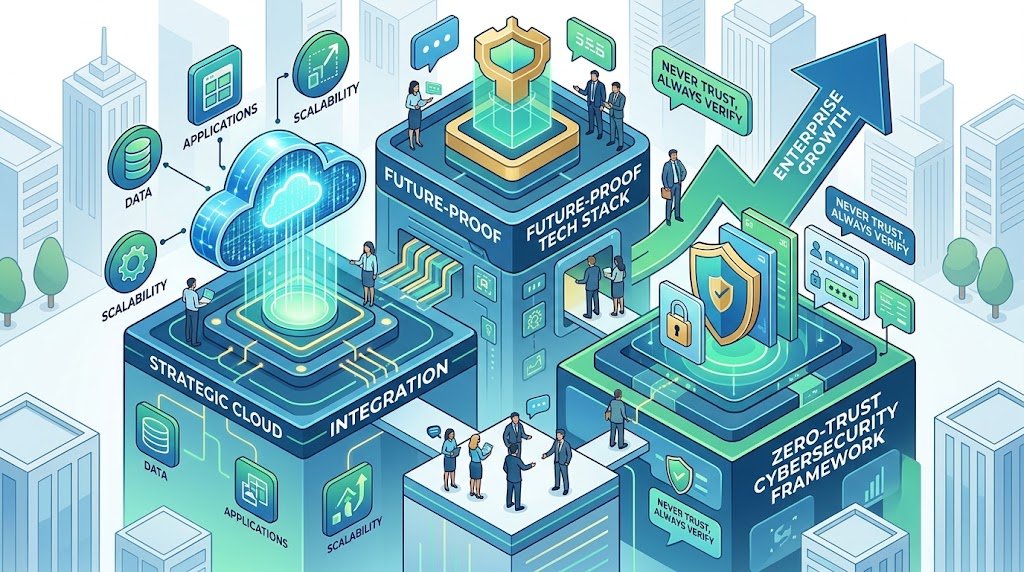
In today’s fast-evolving global marketplace, digital capability directly dictates enterprise longevity and market expansion. Organizations across every sector face continuous pressure to modernize operational frameworks, protect sensitive organizational data, and deliver frictionless customer experiences. To stay competitive, companies are moving away from outdated legacy architectures and embracing flexible cloud infrastructures, automated data workflows, and specialized IT management models.
Adopting integrated enterprise IT solutions provides the structural backbone necessary for modern businesses to streamline global operations, cut overhead costs, and maintain high productivity.
1. Accelerating Modernization Through Strategic Digital Transformation
Digital transformation is fundamentally changing how enterprises create value, serve customers, and manage daily operations. Transitioning to modern software architecture eliminates technical debt, automates manual processes, and enables business leaders to make data-backed decisions in real time.
Key strategic components of digital transformation include:
-
Workflow Automation: Replacing manual and paper-heavy processes with intelligent digital systems to reduce operational errors.
-
Data Integration: Unifying disparate business databases to enable advanced analytics and actionable business intelligence.
-
Customer Experience Optimization: Building responsive, digital-first portals and mobile platforms to boost customer engagement.
Aligning long-term enterprise goals with flexible software frameworks ensures organizations can rapidly adapt to shifting consumer demands and global market disruptions.
2. Scaling Development Capabilities with Dynamic IT Staff Augmentation
Finding, onboarding, and retaining highly skilled technical talent remains a primary operational challenge for expanding companies. As software projects grow in complexity, in-house engineering teams often face capacity limits or lack specialized expertise in niche technologies like cloud deployment, DevOps, or automation testing.
To solve this gap without incurring long-term administrative costs, businesses rely on flexible IT staff augmentation solutions. This model allows organizations to temporarily integrate vetted software developers, system engineers, and project managers directly into their existing teams.
Key benefits of on-demand staff augmentation include:
-
Rapid Onboarding: Access pre-screened technical experts quickly to meet urgent project timelines.
-
Cost Efficiency: Eliminate the long-term recruitment overhead, employee benefits, and training expenses associated with permanent hiring.
-
Agile Resource Allocation: Scale technical teams up or down based on current development phases and fluctuating business needs.
3. Optimizing Infrastructure with High-Performance Cloud Hosting
A resilient, scalable cloud hosting infrastructure forms the foundation of any digital enterprise. Modern applications require hosting environments that guarantee high availability, rapid data processing, and minimal network latency.
High-Performance Hosting Environments
Depending on application workloads and traffic demands, enterprises utilize various specialized hosting solutions:
-
Cloud VPS & VDS Solutions: Ideal for growing applications that require dedicated virtualized CPU and memory resources with scalable capacity.
-
Bare Metal Cloud Servers: Uncompromised physical hardware configurations that provide full resource control, making them perfect for heavy database management, high-volume transactions, and enterprise applications.
-
GPU Server Hosting: High-performance hardware designed to execute intensive parallel processing workloads, AI model training, and advanced graphical rendering.
Global Content Acceleration
To deliver smooth, high-speed digital experiences across geographical regions, organizations deploy content delivery networks (CDNs). A global CDN caches web content closer to end-users, drastically reducing loading times, easing main server pressure, and improving search engine ranking performance.
4. Streamlining Collaboration and Secure Corporate Communications
Seamless communication and secure document sharing are critical for modern enterprises operating with distributed or hybrid workforces. Standardizing enterprise communication tools enhances cross-departmental collaboration and protects organizational intellectual property.
Essential enterprise communication and productivity tools include:
-
Professional Business Email Solutions: Domain-based professional email accounts that establish brand authority and protect communication channels.
-
Google Workspace for Business: Integrated cloud suites offering real-time document editing, secure cloud storage, and video conferencing.
-
Microsoft 365 Enterprise Solutions: Powerful cloud productivity software backed by advanced compliance monitoring, threat protection, and administrative controls.
5. Safeguarding Enterprise Infrastructure with Advanced Cybersecurity
As operational workflows transition to the cloud, cyber threats continue to evolve in frequency and sophistication. Protecting sensitive corporate data, customer credentials, and underlying IT architecture requires a multi-layered security strategy.
Proactive security protocols include:
-
Network Vulnerability Scanning: Regularly auditing system architecture to identify and patch security gaps before exploitation.
-
Encrypted Private Connections: Deploying virtual private network (VPN) encryption protocols to secure internal communications and remote access points.
-
Incident Preparedness & Recovery: Implementing robust data backup systems and swift malware remediation protocols.
In the event of a security breach or digital compromise, having an immediate response plan to fix hacked website security issues is essential to minimize operational downtime, restore user trust, and secure system integrity.
Frequently Asked Questions (FAQs)
1. Why is enterprise IT modernization critical for modern businesses?
Enterprise IT modernization replaces outdated, inefficient legacy platforms with agile cloud infrastructure and integrated software. This enables companies to reduce operational costs, boost system reliability, protect critical data, and deliver faster services to their customers.
2. How does IT staff augmentation differ from software outsourcing?
With staff augmentation, external developers join your internal team directly and work under your management and existing workflows. Full software outsourcing transfers the entire management and execution of a project to an external agency.
3. What is the difference between Cloud VPS and Bare Metal Hosting?
Cloud VPS operates in a virtualized environment where virtual resources are allocated dynamically, making it highly flexible and cost-effective. Bare Metal hosting provides single-tenant physical hardware dedicated entirely to one business, delivering maximum power, raw performance, and isolated security for intensive workloads.
4. What immediate steps should be taken if a business system is compromised?
If a system is compromised, immediately isolate the affected server or application from the main network to prevent malware spread, revoke compromised access credentials, perform a thorough file and database audit, patch security vulnerabilities, and work with specialized security professionals to safely restore systems.
Conclusion
Building a resilient, future-ready business requires a strategic blend of enterprise cloud architecture, dynamic technical staffing, and aggressive cybersecurity defense mechanisms. By modernizing legacy systems, deploying reliable cloud hosting, and securing digital communication channels, enterprises position themselves for sustained digital growth and long-term operational success.